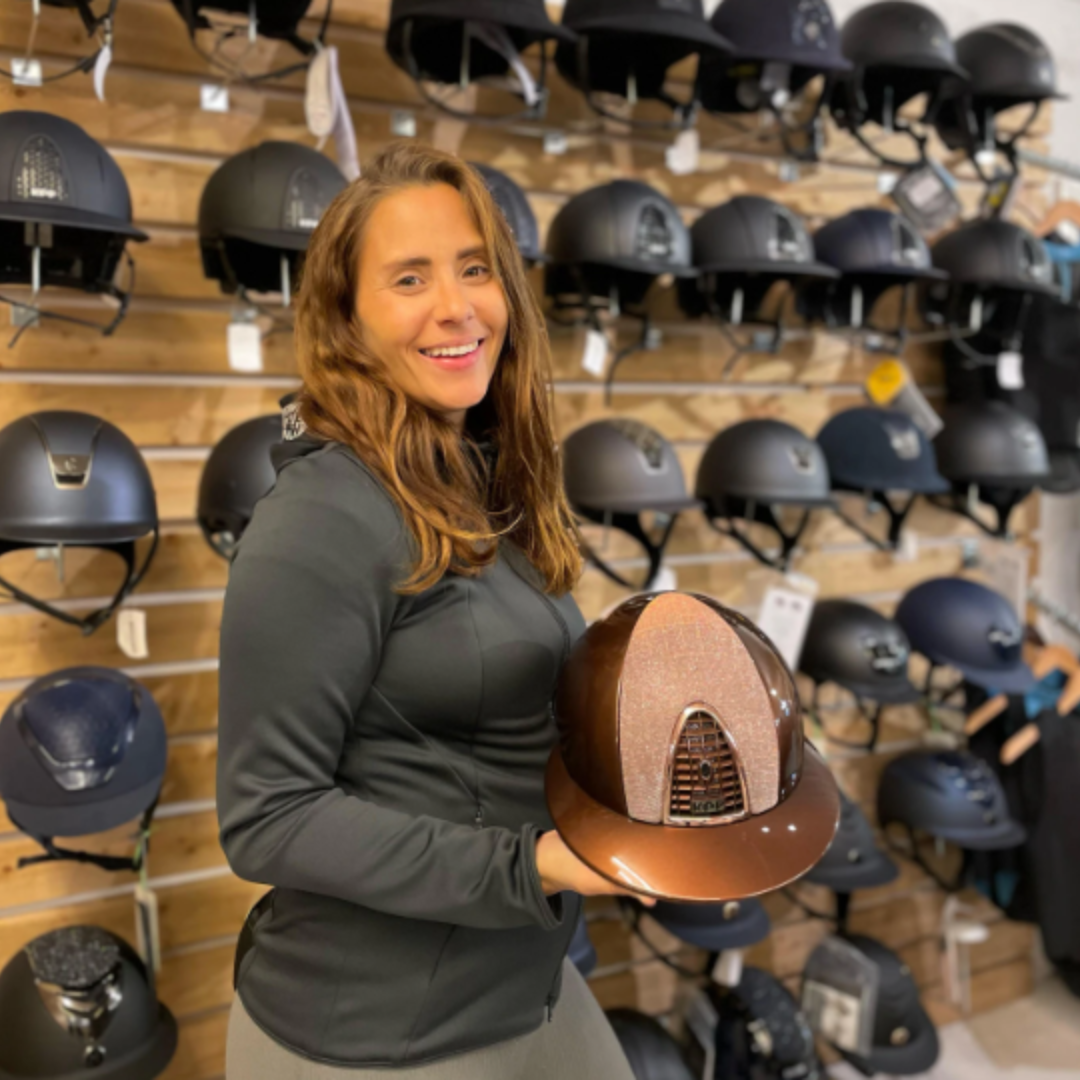
Att hitta rätt i djungeln av ridhjälmar är inte helt lätt, först och främst gäller det att hitta vilken ridhjälm som passar din huvudform bäst, samtidigt som den ska sitta skönt och den ska även uppfylla de säkerhetskrav som gäller för ridhjälmar i Sverige.
Men vad har vi då för säkerhetskrav på hjälmar i Sverige?
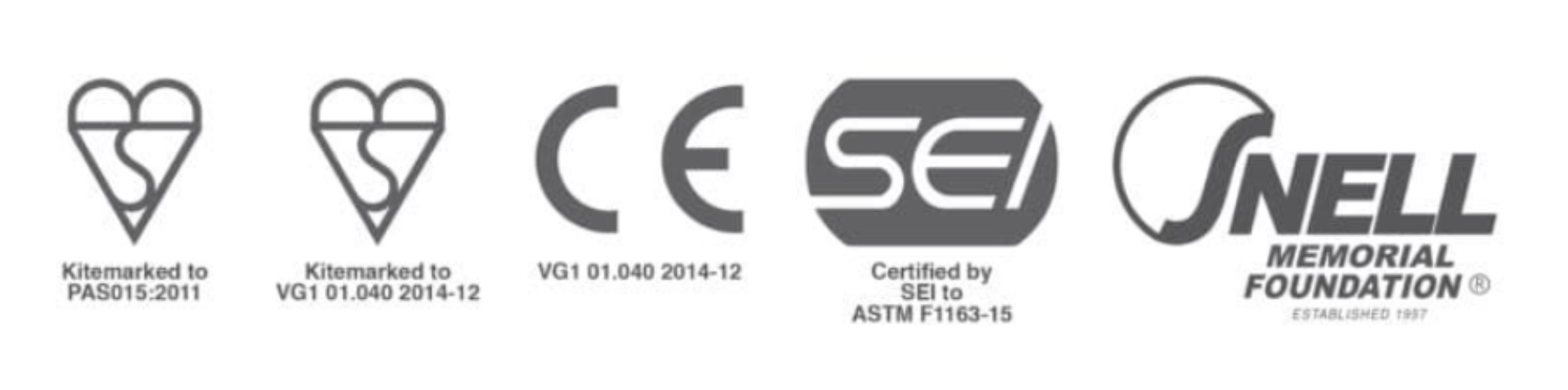
Först måste alla ridhjälmar ha en märkning som heter CE, det är en märkning som intygar att ridhjälmen uppfyller EU:S grundläggande miljö, hälso- samt säkerhetskrav. När nya ridhjälmar tillverkas testas de för att se om de uppfyller kraven att få en CE-märkning, de testas även mot de olika standarderna som finns för att se vilken standard de ska märkas med.
EU har nu tagit fram en ny standard för testning av ridhjälmar, alla nya ridhjälmar ska från och med nu testas mot den standarden. Den nya standaren heter EN1384:2023, vilket kanske låter bekant? Den märkningen finns men det här är en uppdaterad variant med lite högre säkerhetstestning mot föregångaren. EN1384:2023 kommer att gälla inom hela EU och är den nya standarden som alla nya hjälmar kommer testas mot för att få sin CE märkning.
Det som den nya standarden innebär är att ridhjälmarna testas för att ge en bättre stötdämpning och mekanisk hållfasthet samt ökat skydd mot penetration, vilket ökar säkerheten för oss ryttare. Det kommer ske en övergångsperiod där ridhjälmar med den föregående märkningen VG1 kommer vara godkända för tävling fram till 2031. Det betyder att har du en ridhjälm med den gamla märkningen behöver du inte känna stress att byta ut den direkt. Ridhjälmstillverkare rekommenderar att man byter en ridhjälm ungefär var 5e år även om man inte ramlat av då materialet i hjälmarna åldras.
VG1 är säker något du har hört talas om, men vad är egentligen en säkerhetsstandard?
Alla ridhjälmstillverkare måste producera sina ridhjälmar på ett sådant sätt att de möter en av tre internationella säkerhetsstandarder. De säkerhetsstandarder heter PAS015:2011, EN1384:2023 (som ersätter VG1) och ASTM F1163:2015.
Varje standard har en mängd olika test som ridhjälmen måste klara för att ridhjälmen ska bli märkt och godkänd inom den standarden. När man genomför de här testen testas ridhjälmen för olika islag och olycksscenarion som involverar en häst. Det betyder att ju mer säkerhetsstandarder en ridhjälm är märkt med ju fler tester har man gjort på ridhjälmen som den sedan har klarat. Det betyder att om du vill hitta den säkraste ridhjälmen ska du kolla efter den som har flest standardmärkningar.
Vad ska man då tänka på när man väljer ridhjälm?
När du provar ut en ridhjälm är det viktigt och ett riktigt säkerhetstips att ta hjälp av kunnig personal för att prova ut en ridhjälm som sitter så perfekt på ditt huvud som möjligt.
Alla ridhjälmsmärken och deras ridhjälmar är alla olika i deras passform och har du en tanke om vilken ridhjälm du vill ha kan du behöva tänka om då just den modellen av ridhjälm kanske inte passar på ditt huvud. Att välja en ridhjälm som sitter som den ska på ditt huvud är jätteviktigt för din säkerhet när du hanterar och rider hästar.
Vad är det som testas för i de olika standarderna?
När det kommer till de olika standarderna testar de för olika saker, vissa testar för att skydda de mest allvarliga skallskadorna medan andra testar för mer vanliga skador som kan uppkomma vid olycka till häst. En ridhjälmstillverkare kan aldrig förutspå vilket fall du kommer ha från en häst då det finns massor med olika scenarion, du kanske faller av i galopp på en hård grusväg, i skritt på asfalt, in i sargväggen eller att du blir sparkad i huvudet av hästen.
Alla de olika standarderna har olika kriterier som ridhjälmarna ska uppfylla för att de sedan ska få den märkningen. De kommer bland annat undersöka hur mycket av huvudet som täcks av ridhjälmen, hur påverkas ridhjälmen av hur ryttaren ramlar och på vilken yta, hur rör sig ridhjälmen och hur allvarlig en skada kan tänkas bli vid en avramling. Testerna görs för att säkerställa att ridhjälmarna möter en eller flera säkerhetsstandarder.
Att då välja en ridhjälm som uppfyller flera olika standarder har visat sig ge det mest omfattande skyddet och täcker fler potentiella olycksscenarier som vi ryttare kan råka utför.
Vilka ridhjälmar i vårt sortiment har vilken standard?
Hos Charles Owen har nästan alla ridhjälmar trippelstandard: PAS015, VG1 01.040 2014-12 och ASTM.
Charles Owen ridhjälmar är de med flest standarder och de vi får sälja över hela världen, vilket vi inte får med alla ridhjälmsmärken då olika delar av världen har olika krav på säkerhetsmärkningar och vad som krävs för en godkänd ridhjälm.
KEP har standard VG1 01.040 2014-12, SEI/ASTM F1163 / 2015 och ISO 9001:2015
Samshield har lite olika beroende på modell, Shadowmatt/Miss Shield Matt och Premium har CE EN 1384:2017, VG1 01.040 2014-12 och ASTM/SEI. Deras nya 2.0 ridhjälmar i samma utförande har EN1384:2023, VG1 01.040 2014-12 och ASTM 2023
Kask har CE VG1 01.040 2014-12 och ASTM/SEI
OneK har VG1 01.040 2014-12 (EN1384:2023)
Hansbo har CE VG1 01.040 2014-12 (EN1384:2023)
Uvex har alla ridhjälmar märkningen EN 1384:2012 + VG1 01.040 2014-12 och de nya som tillverkas kommer få den nya märkningen EN 1384:2023
Alla de ovanstående ridhjälmarna som har VG1 01.040 2014-12 kommer få den nya standarden EN1384:2023
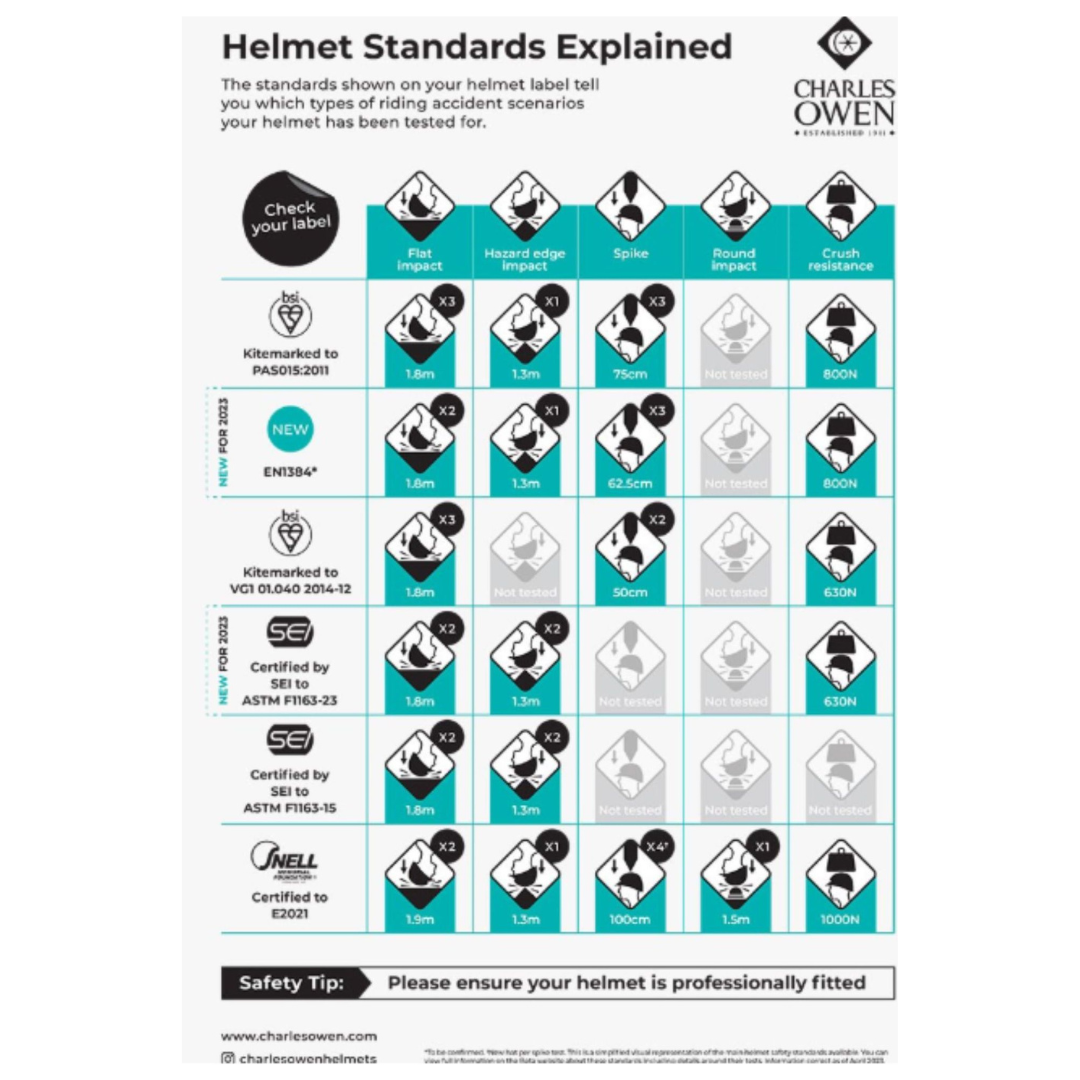
Här ser du en bra och enkel lista över de olika ridhjälmsstandarderna.
Sedan finns en standard som vi inte ser allt för ofta i ridhjälmar, det är en standard som testar många olika scenarion (som ni ser i listan nedan) och det används ofta i motorcykelhjälmar. Även om det är en standard som ger ett väldigt bra skydd blir hjälmarna väldigt otympliga och klumpiga och är inte helt optimala till oss ryttare.
Mips? Är inte en säkerhetsstandard utan en svensk uppfinning som skapat en efterfrågan att ha skyddet i ridhjälmar som säljs på svenska marknaden, det är inget som efterfrågas utomlands. Flera ridhjälmstillverkare väljer att ha ridhjälmar både med mips och utan, för att möta efterfrågan. Ridhjälmar som KEP, KASK, Samshield och de hjälmar från Charles Owen som inte har mips, där är deras ridhjälmar testade för rotationsfall och klarat de testerna och de ser inte funktionen i att då också ha mips i sina ridhjälmar.
Vi på Hogsta Ridsport brinner för ridhjälmar, vårt fokus är att hjälpa våra kunder att prova ut och hitta den ridhjälmen som sitter mest optimalt. Alla de ridhjälmar vi valt att ha vårt sortiment är utvalda då de är säkra ridhjälmar som har genomgått noggrann testning. Allt för att du som kund ska känna dig trygg med oss och ditt val av din nya ridhjälm!

)