Så fodrar du ditt dräktiga och digivande sto
Updated: 14 Apr 2026
Published: 20 Mar 2026
Förhoppningen är att efter fölningen ha både ett friskt, starkt föl och ett välmående sto. En väl avvägd foderstat till stoet under hela dräktigheten och digivningen är A och O för att stoet ska må bra men även för att fölet ska få en bra start i livet och utvecklas till en frisk och hållbar häst.
Förbered stoet för betäckning
Redan innan betäckningen är det viktigt att stoets foderstat är väl anpassad till hennes behov. Brist på näringsämnen minskar chansen att stoet blir dräktigt och ökar dessutom risken för att stoet kastar tidigt. Optimalt hull är av största vikt för en lyckad betäckning och fortsatt dräktighet. Ston som ligger över 5 på Hennekes hullbedömningsskala har visats ha lättare att ta sig vid betäckning än ston som är i underhull. Det är även viktigt att se till att stoets vitaminbehov är täckt året om för att säkerställa en lyckad betäckning.
Vitamininnehållet i färskt gräs är högt men på grund av långa vintrar här i Norden behöver vi lagra vallfoder som hö eller hösilage och ge hästarna det under större delen av året. Eftersom vitaminer inte är särskilt lagringsbeständiga är vitamininnehållet i lagrat vallfoder lägre än i färskt gräs. I vanliga fall täcks ändå hobbyhästens behov av vitaminer av grovfodret. Ett tillskott av vitamin A, D och E kan dock vara fördelaktigt för att säkerställa att avelsstoet får i sig den mängd hon behöver, eftersom behovet ökar under dräktighet och digivning. Det är framförallt under de månader då stoet inte har tillgång till färskt gräs som ett vitamintillskott kan vara aktuellt.
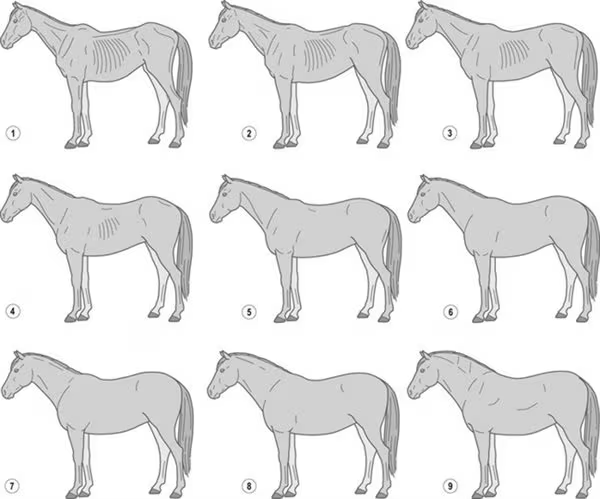
Illustration av hullbedömningsskalan efter Henneke et al., (1983).
Näringsbehovet förändras under dräktigheten
Under de första dräktighetsmånaderna är stoets näringsbehov samma som när hon inte är dräktig, eftersom fostret inte växer så mycket i början. Det är under de fyra sista dräktighetsmånaderna som fostertillväxten tar fart ordentligt och det är då stoets näringsbehov ökar. Energibehovet ökar med 15–30% de sista månaderna av dräktigheten. Även proteinbehovet ökar drastiskt hos det dräktiga stoet, bland annat på grund av fölets skelettillväxt som kräver stora mängder protein. För att täcka behovet av energi och protein är det viktigt att ha ett näringsrikt grovfoder av hög kvalitet. I Utfodringsrekommendationer för häst från SLU rekommenderas ett energiinnehåll över 9 MJ/kg TS och en kvot mellan smältbart råprotein och energi över 8. Eftersom fostret tar mycket plats i stoets bukhåla mot slutet av dräktigheten kan det vara svårt att äta så stora mängder grovfoder hon hade behövt för att täcka näringsbehovet. Då kan det vara aktuellt att lägga till ett näringstätare kompletteringsfoder i foderstaten.
Förutom ett ökat behov av energi och protein ökar även behovet av mineraler under den senare delen av dräktigheten. Det är viktigt att stoet får tillräcklig mängd mikromineraler under de två sista månaderna eftersom fölet under den tiden bygger upp ett lager av mikromineraler i levern. I stoets mjölk finns mycket kalcium men inte några större mängder mikromineraler. Därför behöver fölet lagra in tillräckligt med mikromineraler i levern så det klarar sig fram till det börjar äta fast föda.
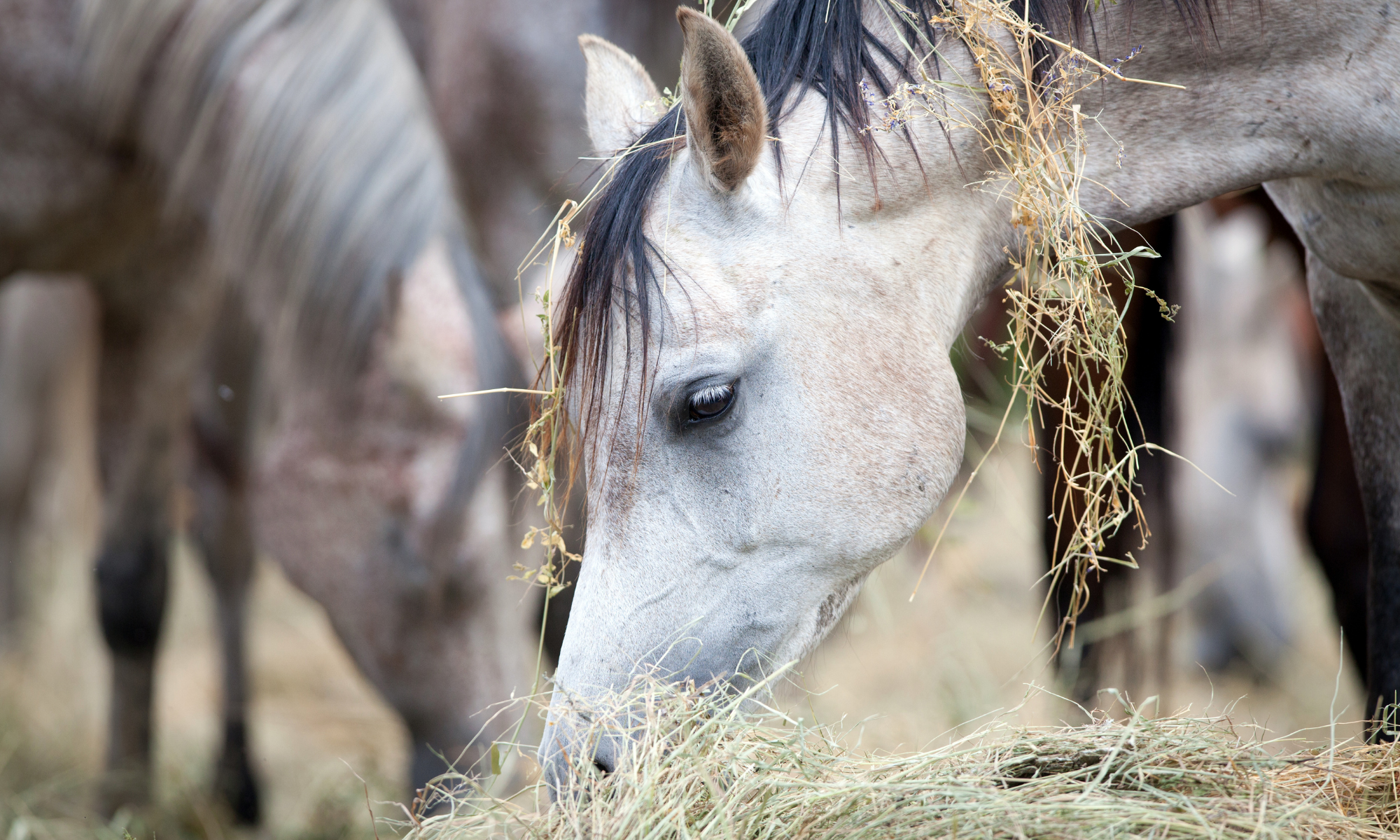
Vad stoet äter kan ha stor inverkan på fölets hälsa
Både underhull och överhull hos avelsstoet har visats kunna påverka fölets hälsa negativt. Föl till ston som varit undernärda under dräktigheten har inte påverkats till en början utan fötts som normalviktiga. Det är senare i deras utveckling man har kunnat se sen utveckling av testiklar, tunnare rörben (den typ av skelett som till exempel finns i hästens ben) och nedsatt insulinkänslighet (riskfaktor för fång). Nedsatt insulinkänslighet har även setts hos föl där stoet istället varit överviktigt. Dessa störningar i fölets utveckling kan ha stor betydelse för dess hälsa och hållbarhet genom livet.
Utfodring av stora mängder stärkelse har visats kunna påverka fölets utveckling negativt med ökad risk för osteokondros (Peugnet et al., 2015). Ett bra riktmärke för att inte överutfodra stärkelse till det dräktiga stoet är att hålla givan under 1g stärkelse per kilo kroppsvikt per måltid.
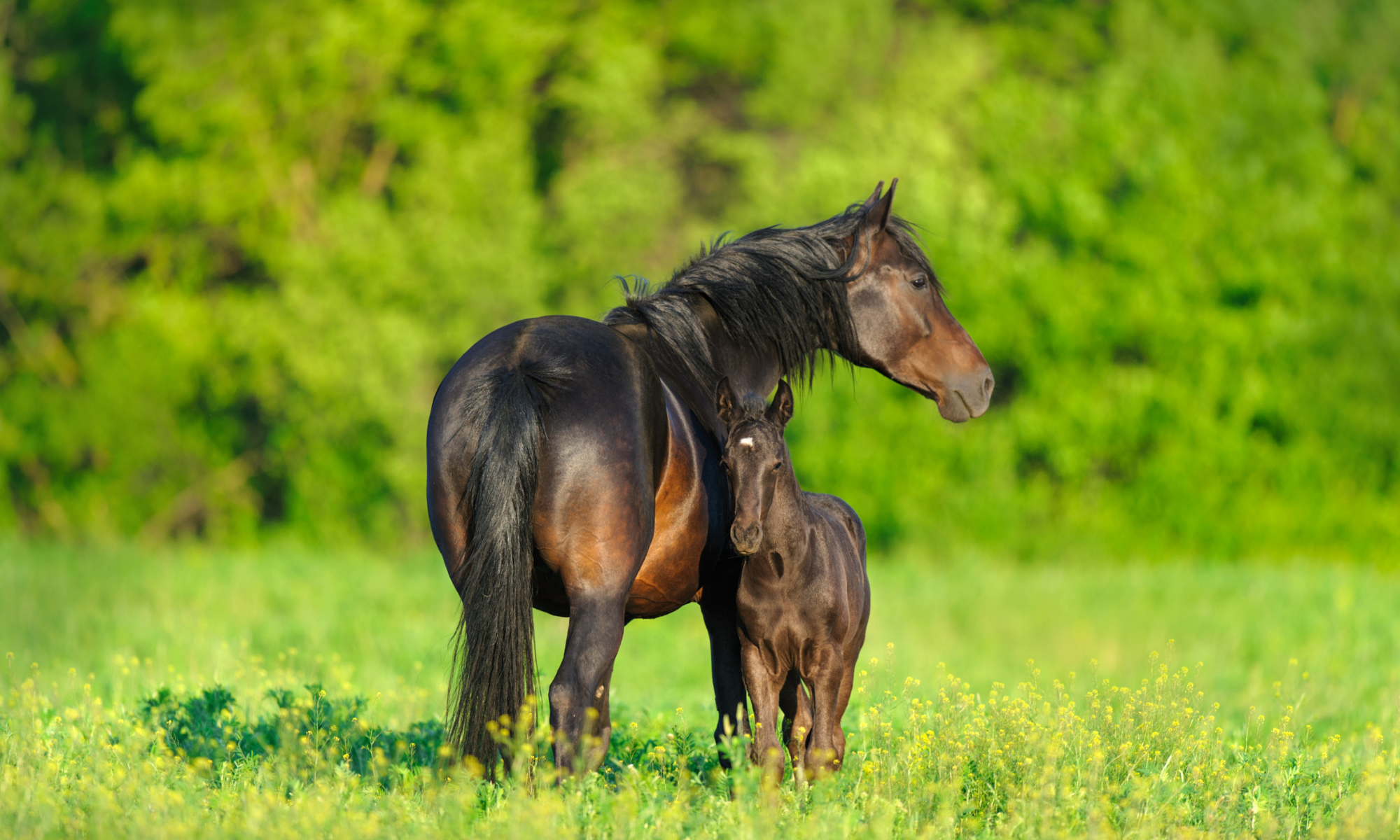
Fölets första månader
Det nyfödda fölet har inga stora energireserver så det är viktigt att det får i sig mjölk från stoet så snabbt som möjligt. Den första mjölken som stoet producerar, råmjölken, är näringsrik men det är inte bara näring fölet behöver få i sig med råmjölken. Den innehåller även antikroppar som är nödvändiga för att fölet ska få motståndskraft mot infektioner. Hos många djurslag överförs antikroppar via moderkakan. Så är inte fallet hos hästen, istället måste fölet få i sig råmjölk i tillräcklig mängd för att klara sig. Hästen är en grovtarmsjäsare och är helt beroende av att ha ett stort antal mikroorganismer i grovtarmen som kan omvandla fibrer i grovfodret till ämnen som hästen kan ta upp och använda som energi. Fölet saknar dessa mikroorganismer vid födseln och behöver därför få i sig mikroorganismer från stoet via råmjölken för att kunna etablera en stabil mikrobiota.
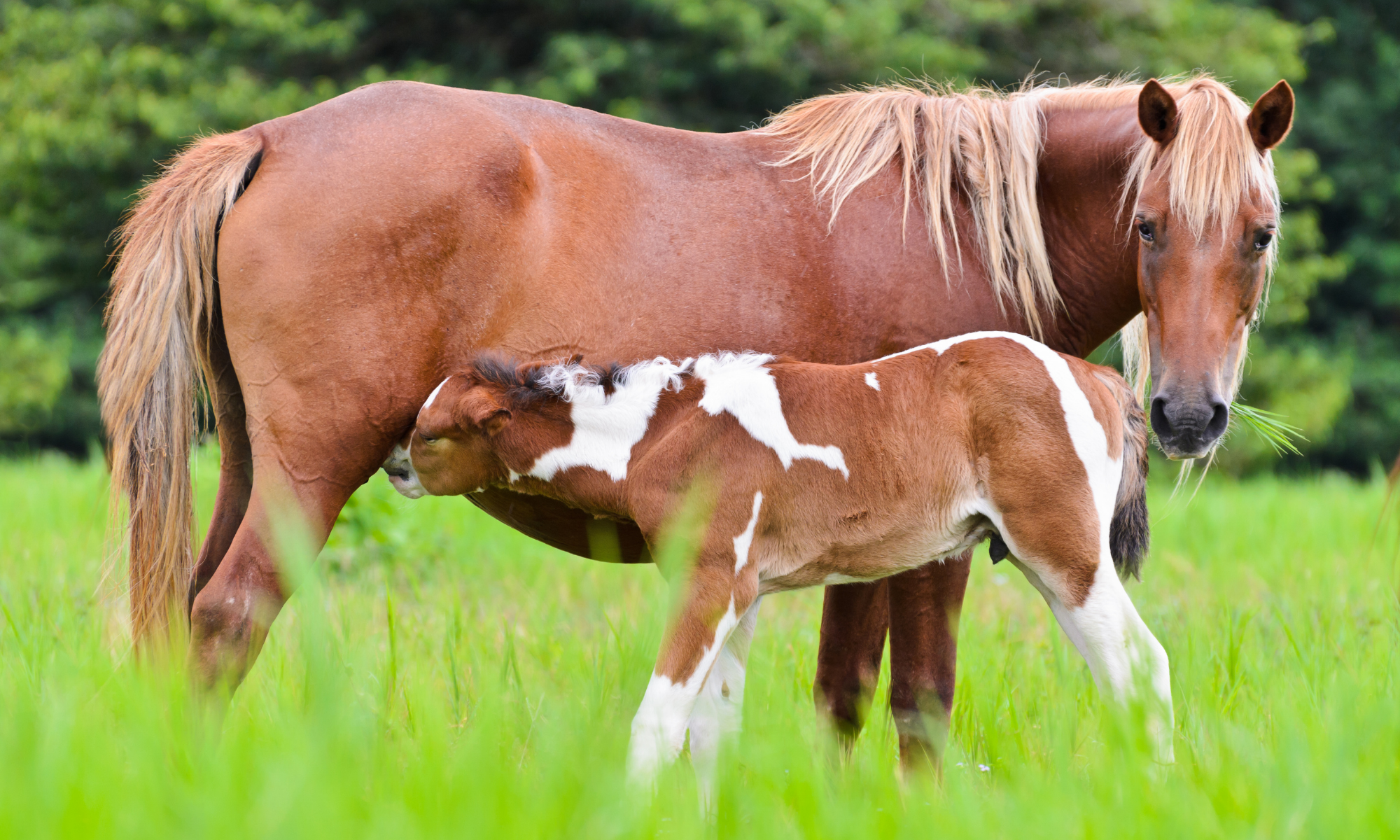
Under digivningen ökar stoets näringsbehov ytterligare, då mjölkproduktion är en krävande process. Energibehovet hos stoet är mycket högt i början av digivningen, ungefär det dubbla jämfört med underhållsbehovet. Proteininnehållet i mjölken är högst i början av digivningen (1-3:e digivande månaderna) och sjunker sedan successivt vilket gör att stoets proteinbehov också är högst i början och sedan avtar.
Avvänjning
Avvänjningen innebär alltid en stress för fölet. Ofta avtar tillväxten under en period då kontakten med stoet och modersmjölken inte längre finns att tillgå. Det är bra om fölet har fått möjlighet att äta fölfoder redan när det går med stoet så att det har hunnit vänja sig vid det när det är dags för avvänjning. Det är fortsatt viktigt att fölets näringsbehov täcks under de första åren då tillväxten är hög.
Var noga med att inte glömma bort stoet vid avvänjningen. Det är lätt att allt fokus hamnar på fölet och dess fodring. Stoet behöver åter igen vara redo för en krävande utmaning för att kunna leverera ännu ett friskt föl. Om stoet ska betäckas igen efter fölningen är det viktigt att se till att hon är i gott skick för att klara ännu en dräktighet. Hon måste ha nog med resurser både för att ge fölet vad det behöver men hon behöver också näring själv, och till ett eventuellt nytt föl på tillväxt i livmodern.
Text skriven av: Hanna Lundqvist, St. Hippolyt (2021)
Foderrådgivare & Agronom med en Master i Animal Science
Rekommenderade produkter till avelston från St. Hippolyt
NaturMüsli Easy Breeder är ett avelsfoder för raser eller individer som inte tål stora mängder stärkelse och socker. Näringsinnehållet är anpassat för dräktiga och digivande ston, utan att tillföra stora mängder energi.
Även Beta-Carotin Mare-Y-Mix rekommenderas till avelshästar. Avelshästars höga behov av ß-Karoten täcks inte med fodret vintertid. Brister kan leda till sen eller svag brunst, försämrad follikelbildning och dålig embryonalutveckling. ß-Karoten bör därför ges avelsston och -hingstar november till april.
Produkter från St. Hippolyt
Källor
Chavatte-Palmer, P., & Robles, M. (2019). Developmental programming: Can nutrition of the mare influence the foal's health? Revista Brasileira de Reprodução Animal, 43(2), s. 168-183.
Henneke, D., Potter, G., Kreider, J., Yeates, B. (1983). Relationship between condition score, physical measurements and body fat percentage in mares. Equine Veterinary Journal 15, s. 371–372.
Jansson, A. (Ed.). (2013). Utfodringsrekommendationer för häst. Institutionen för husdjurens utfodring och vård, Sveriges lantbruksuniversitet.
Lawrence L, Camargo F. University of Kentucky Cooperative Extension Service. Feeding the broodmare: four easy steps.
Möller, J. (2005). Vitamin A och E i relation till hästutfodring.
Peugnet, P., Robles, M., Mendoza, L., Wimel, L., Dubois, C., Dahirel, M., Guillaume, D., Camous, S., Berthelot, V., Toquet, M.P., Richard, E., Sandersen, C., Chaffaux, S., Lejeune, J.P., Tarrade, A., Serteyn, D. & Chavatte-Palmer, P. (2015). Effects of moderate amounts of barley in late pregnancy on growth, glucose metabolism and osteoarticular status of pre-weaning horses. PLoS One, 10(4), e0122596.
Planck, C., & Rundgren, M. (2005). Hästens näringsbehov och utfodring. Natur och Kultur. Fakta etc.
fölaveldräktigt sto

)